
Filtered Water and TDS Readings: What a TDS Meter Can and Cannot Tell You
Total dissolved solids, often called TDS, refer to the dissolved minerals, salts, metals, and ions in water. A TDS meter can be useful, but it does not tell the full story of water quality.
A low TDS reading does not automatically mean water is safer. A high TDS reading does not automatically mean water is dangerous. TDS simply measures dissolved solids. It does not identify what those solids are.
This is especially important for filtered water. Some water filters are designed to reduce specific contaminants while leaving minerals in the water. In those cases, the TDS reading may not change much after filtration.
What Is TDS?
TDS stands for total dissolved solids. These are substances dissolved in water, including minerals, salts, metals, and charged ions.
Common sources of TDS include:
- Natural minerals from rocks and soil
- Calcium and magnesium hardness minerals
- Sodium and chloride
- Road salt runoff
- Fertilizers
- Water treatment chemicals
- Plumbing materials
- Groundwater minerals
TDS is usually measured in parts per million (ppm). It may also be listed as milligrams per liter (mg/L).
What Does a TDS Meter Measure?
Most handheld TDS meters do not directly identify contaminants. Instead, they estimate dissolved solids by measuring electrical conductivity. Water with more dissolved ions conducts electricity more easily, so the meter converts that reading into an estimated TDS number.
This makes TDS meters useful for tracking general changes, especially with reverse osmosis systems. However, they are not a substitute for a laboratory water test.
EPA Secondary Standard for TDS
The EPA’s secondary standard for total dissolved solids is 500 mg/L. Secondary standards are not the same as primary health-based limits. They are generally related to taste, color, odor, staining, deposits, and other aesthetic or household effects.
Water with TDS above 500 ppm may taste salty, mineral-heavy, bitter, or flat. It may also contribute to scale, deposits, or staining depending on the minerals present.
Simple TDS Reading Guide
| TDS Reading | What It May Mean |
| 0-50 ppm | Very low dissolved minerals; common with distilled, deionized, or some RO water |
| 50-300 ppm | Common range for many drinking water sources |
| 300-500 ppm | May have noticeable mineral taste or hardness effects |
| Over 500 ppm | Above the EPA secondary guideline, consider testing to understand what is contributing to the reading |
| Over 1,000 ppm | May have strong taste, scaling, or mineral concerns; professional water testing is recommended |
What TDS Does Not Tell You
A TDS meter does not tell you whether your water contains a specific contaminant. It also does not show whether a filter is reducing contaminants that are not measured well by conductivity.
A TDS meter does not reliably detect:
- Chlorine
- Chloramine
- PFAS
- VOCs
- Pesticides
- Pharmaceuticals
- Many organic compounds
- Bacteria or other biological concerns
- The specific identity of dissolved metals
This is why a TDS reading should not be used as the only test for water safety.
Why Filtered Water May Still Have a TDS Reading
Some filters are designed to reduce taste, odor, chlorine, certain metals, or other contaminants while leaving minerals such as calcium and magnesium in the water.
If a filter leaves minerals in the water, the TDS reading may stay about the same. That does not necessarily mean the filter is not working. It may simply mean the filter is not designed to remove dissolved minerals.
Why TDS May Increase After Filtration
In some cases, filtered water may show a slightly higher TDS reading after passing through a filter. This can happen for several reasons:
- New filter elements may release harmless fine particles during early use.
- Ion-exchange media may exchange ions that can still register as TDS.
- Minerals already in the water remain after filtration.
- The meter reading may vary because of temperature, calibration, or testing technique.
If a filter has a flushing or priming process, follow the instructions before testing the water.
TDS and Reverse Osmosis
TDS meters are especially useful for reverse osmosis systems because RO membranes are designed to reduce dissolved solids concentration.
You can estimate RO membrane performance with this formula:
Percent rejection = [(Tap water TDS - RO water TDS) / Tap water TDS] x 100
Example:
Tap water TDS: 260 ppm
RO water TDS: 20 ppm
Calculation: [(260 - 20) / 260] x 100 = 92.3%
If your RO system is new, do not test the first tank of water. New systems often need to be flushed before readings become accurate.
How to Reduce TDS
If your goal is to reduce TDS specifically, choose a system designed for dissolved solids. Common options include:
Reverse Osmosis
Reverse osmosis uses pressure to push water through a membrane. It is commonly used to reduce many dissolved solids and is often installed under the sink.
Distillation
Distillation heats water into steam, then condenses it back into liquid water. Many dissolved solids are left behind. This method is slower and uses energy.
Deionization
Deionization uses ion exchange resins to remove charged mineral ions. It is often used for laboratory, technical, or specialty applications rather than everyday drinking water.
Carbon Filters and TDS
Activated carbon filters are commonly used to improve taste and odor and reduce certain substances, depending on the filter design. However, carbon filters generally do not remove dissolved minerals as effectively as reverse osmosis, distillation, or deionization.
Because of this, a carbon-based filter may improve water taste and reduce certain contaminants without causing a major drop in TDS.
Berkey Water Filters and TDS Readings
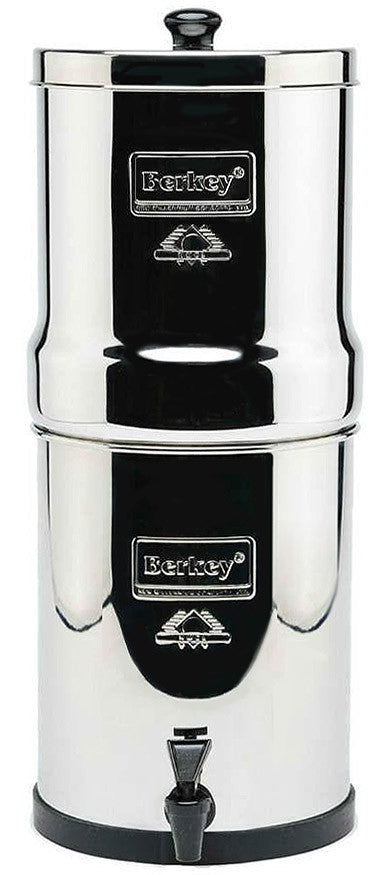
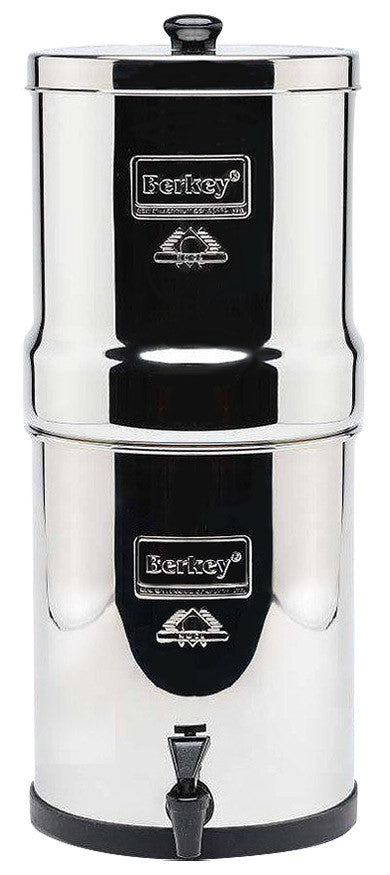
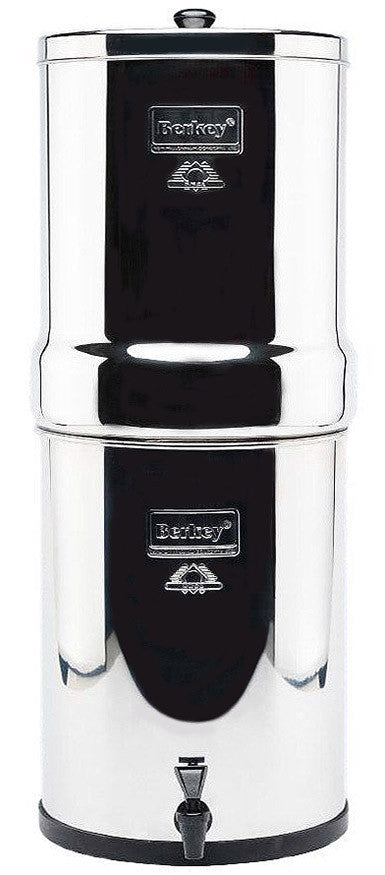
Berkey water filter systems are gravity-fed countertop systems. They are designed for everyday drinking water filtration without electricity or plumbing.
Because Berkey systems are not designed to remove all beneficial minerals from water, a TDS meter may show little change before and after filtration. This does not automatically mean the elements are not working. It means TDS is not the right test for every type of filtration performance.
During the initial setup and flushing period, some users may notice temporary changes in TDS. Always follow the product instructions for priming, flushing, and maintenance.
Shop Berkey Water Filter Systems
Recommended Berkey Systems
Travel Berkey Water Filter
The Travel Berkey is a compact stainless steel system for individuals, couples, RVs, and smaller kitchens.
Big Berkey Water Filter
The Big Berkey is one of the most popular Berkey systems for everyday household drinking water.
Royal Berkey Water Filter
The Royal Berkey offers more capacity for families or homes that use more drinking water each day.

When Should You Test Beyond TDS?
You should consider a laboratory water test if:
- Your water suddenly changes color, taste, or odor.
- You use a private well.
- You are concerned about lead, PFAS, arsenic, nitrates, pesticides, or VOCs.
- Your home has older plumbing.
- Your TDS is above the EPA secondary guideline.
- You want to confirm whether a filter is addressing a specific contaminant.
Final Thoughts
A TDS meter is a useful tool, but it has limits. It measures dissolved solids. It does not measure overall water safety or identify individual contaminants.
If your filtered water still has a TDS reading, that may be normal. Some filters are designed to leave beneficial minerals in the water while addressing taste, odor, and other targeted concerns.
For the most accurate picture of your water quality, use TDS as one small clue. Then review your local water report, test when needed, and choose a filtration system based on your actual water concerns.
← Older Post Newer Post →