
Is U.S. Tap Water Safe to Drink? Facts About Sink Water and Home Filtration
For most Americans served by a public water system, tap water is treated, monitored, and regulated under federal and state drinking water standards. That makes U.S. tap water generally safe for everyday use in many communities.
Still, water quality is not exactly the same everywhere. Your local water source, treatment plant, distribution pipes, home plumbing, private well condition, and local advisories can all affect what comes out of your faucet.
This guide explains how U.S. tap water is regulated, when you should check your local water report, why some households choose a home water filter, and how to make more informed decisions about the water you drink every day.
Is Tap Water in the U.S. Safe?
In general, tap water from public water systems in the United States is treated and tested to meet drinking water standards. Public water systems are regulated under the Safe Drinking Water Act, and community water systems provide annual Consumer Confidence Reports so customers can review local water quality information.
However, “generally safe” does not mean every home has the same water quality. Some communities face water main breaks, boil water advisories, aging infrastructure, lead service lines, PFAS concerns, local contamination, or temporary treatment issues.
The safest answer is: tap water is usually safe in many U.S. communities, but you should check your local water report and pay attention to local advisories.
How Is Tap Water Regulated?
The U.S. Environmental Protection Agency sets national drinking water standards for public water systems. States and local water utilities also play important roles in testing, treatment, reporting, and responding to problems.
If you receive a water bill from a city, county, or water utility, you likely use a public water system. These systems must monitor for regulated contaminants and notify customers when certain problems occur.
Each year, community water systems provide a Consumer Confidence Report, often called a CCR. This report explains where your water comes from, what was detected, whether any standards were exceeded, and what customers should know about their local water.
You can usually find your CCR on your water utility’s website or through the EPA’s Consumer Confidence Report resources.
What If You Use a Private Well?
Private wells are different. If your home uses a private well, your water is not regulated, treated, or monitored by public officials in the same way as a public water system.
Well owners are responsible for testing and maintaining their own water. The CDC and EPA recommend regular testing and contacting your local health department for guidance on water quality concerns in your area.
At a minimum, private well owners should consider annual testing for:
- Total coliform bacteria
- Nitrates
- Total dissolved solids
- pH
Depending on your location, you may also need testing for arsenic, lead, manganese, iron, pesticides, PFAS, radon, volatile organic compounds, or other local concerns.
Where Does Tap Water Come From?
Drinking water usually comes from one of two source types:
- Surface water: Rivers, lakes, and reservoirs
- Groundwater: Aquifers and wells
Public water utilities treat water before delivering it through pipes. Treatment varies by location, but it often includes several steps.
Common Water Treatment Steps
- Coagulation and flocculation: Chemicals help small particles clump together.
- Sedimentation: Heavier particles settle out of the water.
- Filtration: Water passes through materials such as sand, gravel, or carbon.
- Disinfection: Chlorine, chloramine, ozone, or UV may be used to help control germs.
- Storage and distribution: Treated water is stored and delivered through pipes.
Why Can Tap Water Taste or Smell Different?
The taste of tap water can vary for many reasons. Chlorine or chloramine may create a disinfectant taste or smell. Minerals can create a hard-water taste. Iron or old plumbing may create a metallic note. Seasonal algae in source water can sometimes create earthy or musty smells.
These taste and odor issues do not always mean the water is unsafe, but they can make drinking water less enjoyable.
Common Tap Water Concerns
The following issues may appear in some areas. Not every home has these concerns, which is why local reports and testing matter.
1. Chlorine and Chloramine
Many public water systems use chlorine or chloramine for disinfection. These disinfectants help protect water as it moves through pipes, but they can affect taste and smell.
2. Lead
Lead usually enters drinking water through plumbing materials, service lines, solder, or fixtures. Homes with older plumbing may have a higher risk. If lead is a concern, test your water and follow local guidance.
3. PFAS
PFAS are a group of man-made chemicals that may be found in some drinking water sources. Public attention around PFAS has increased in recent years, and the EPA has been developing and updating drinking water rules for several PFAS compounds.
4. Arsenic
Arsenic can occur naturally in groundwater in some regions. It may also be associated with certain industrial or agricultural activities. Private well owners in affected regions should ask about arsenic testing.
5. Nitrates
Nitrates can come from fertilizers, septic systems, and agricultural runoff. This is especially important for households with infants, pregnant women, or private wells.
6. Hardness Minerals
Hard water contains minerals such as calcium and magnesium. It is usually more of a household comfort and appliance issue than a drinking water safety issue, but it can cause scale buildup and affect taste.
7. Iron and Manganese
Iron and manganese can create staining, sediment, metallic taste, or discolored water. These are often common well water concerns.
How to Check If Your Tap Water Is Safe
Start with these steps:
- Read your local Consumer Confidence Report.
- Check your water utility’s website for current advisories.
- Pay attention to boil water notices or do-not-drink notices.
- Test your water if you have older plumbing or a private well.
- Contact your local health department if you notice sudden changes in taste, smell, or color.
When Should You Avoid Drinking Tap Water?
Do not drink tap water if local officials issue a do-not-drink or do-not-use notice. During a boil water advisory, follow local instructions carefully.
You should also use extra caution if:
- Your water suddenly turns brown, red, cloudy, oily, or has visible particles.
- Your home has been affected by flooding.
- You suspect chemical, fuel, or sewage contamination.
- Your private well has not been tested recently.
- Your plumbing may contain lead service lines or old lead solder.
If chemical contamination is suspected, boiling water may not make it safe. Use bottled water or another approved source until officials provide guidance.
Tap Water vs. Bottled Water
Bottled water can be useful during emergencies, travel, or temporary advisories. However, for everyday use, bottled water can be expensive, heavy to store, and create plastic waste.
Many households prefer to use a home water filter for daily drinking water. This can improve taste, reduce reliance on bottled water, and make hydration more convenient.
Should You Use a Water Filter?
A water filter is not always required, but it can be a practical choice for many households. A filter may help improve taste, odor, and certain water quality concerns, depending on the filter design.
Before choosing a filter, ask:
- Do I use public water or a private well?
- What does my local water report show?
- Do I have older plumbing?
- Am I mainly concerned about taste and odor?
- Am I trying to address a specific contaminant?
- How much maintenance am I willing to do?
Common Home Water Filter Options
| Filter Type | Common Use | Considerations |
| Pitcher filter | Small households and taste improvement | Limited capacity; frequent refilling |
| Faucet filter | Easy kitchen tap filtration | May not fit every faucet |
| Countertop gravity filter | Daily drinking water without plumbing | Uses counter space; requires refilling |
| Under-sink filter | Drinking and cooking water | May require installation |
| Reverse osmosis | Broader dissolved-substance reduction goals | Requires maintenance, space, and water pressure |
| Whole-house filter | Housewide sediment, taste, or odor concerns | Higher cost; professional installation may be needed |
Where Berkey Fits Into Everyday Tap Water Use
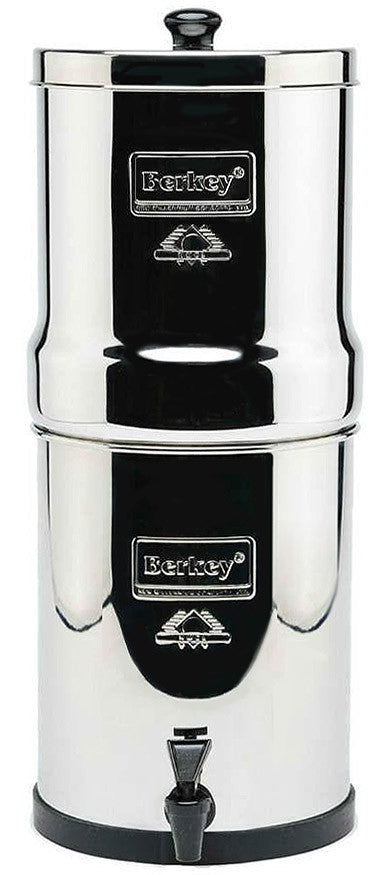
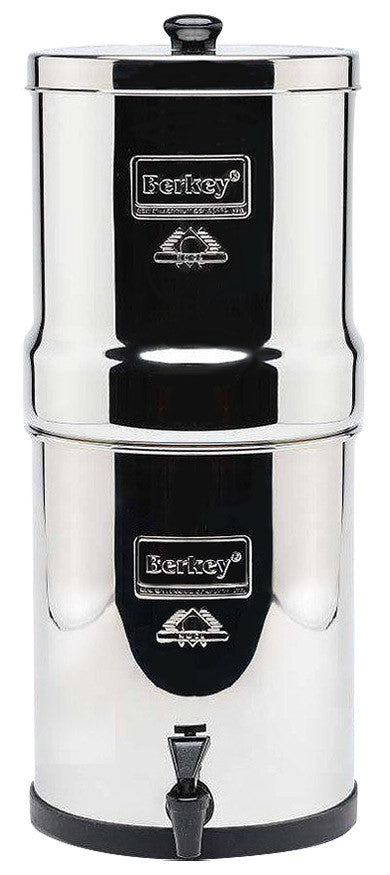
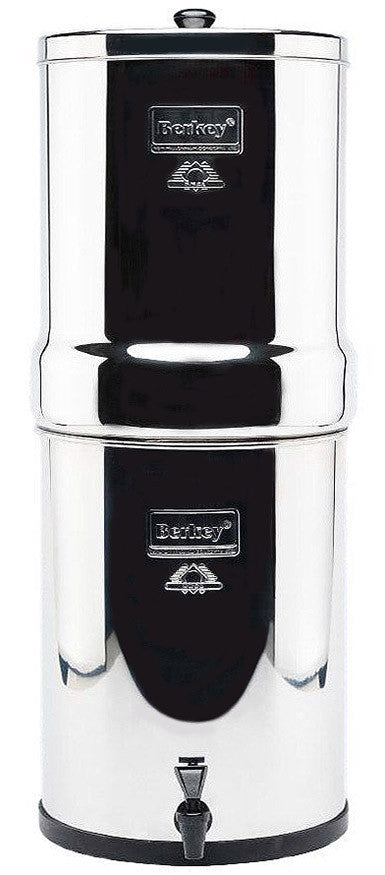
Berkey water filter systems are countertop, gravity-fed systems. They do not require electricity, plumbing, or water pressure. This makes them convenient for apartments, kitchens, offices, RVs, and households that want a simple drinking water filter.
For many customers, the main benefit is better-tasting water that is easy to access every day. A Berkey system can be part of a household’s drinking water routine when used according to the product instructions and properly maintained.
Shop Berkey Water Filter Systems
Recommended Berkey Systems
Travel Berkey Water Filter
The Travel Berkey is a compact stainless steel system for individuals, couples, RVs, and smaller kitchens.
Big Berkey Water Filter
The Big Berkey is one of the most popular Berkey systems for everyday home use. It offers a practical balance of capacity and countertop footprint.
Royal Berkey Water Filter
The Royal Berkey offers more capacity for families or households that use more drinking water each day.

How to Protect Your Household Water
- Read your annual water quality report.
- Replace home filter cartridges or elements on schedule.
- Clean reusable bottles and pitchers regularly.
- Flush taps after long periods of non-use.
- Use cold water for drinking and cooking.
- Test private well water regularly.
- Follow all local water advisories.
- Contact your water utility if water suddenly changes color, taste, or smell.
Final Thoughts
So, is U.S. tap water safe to drink? In many communities, yes. Public tap water is regulated, treated, and monitored. But water quality can still vary based on location, plumbing, source water, and temporary local issues.
The best way to understand your own tap water is to check your local water report, pay attention to advisories, and test when needed. If you use a private well, testing is especially important because the responsibility falls on you.
A home water filter can be a practical addition for taste, convenience, and everyday confidence. Choose a system that matches your water source, your concerns, and your maintenance routine.
← Older Post Newer Post →