
Sterile vs. Distilled vs. Deionized Water: What’s the Difference?
Sterile water, distilled water, and deionized water are often confused because they all sound “clean” or “pure.” However, they are not the same. Each type of water is produced by a different process and used for different purposes.
The most important thing to know is this: the right water depends on the use. Water for drinking, medical procedures, laboratory work, aquariums, humidifiers, and appliances may all require different qualities.
This guide explains the differences among sterile, distilled, and deionized water, when each is used, and what to consider for everyday drinking water at home.
Quick Comparison
| Water Type | Main Process | What It Mainly Addresses | Common Uses |
| Sterile Water | Sterilization and aseptic packaging | Living microorganisms | Medical, laboratory, irrigation, and specific sterile applications |
| Distilled Water | Boiling, steam collection, condensation | Many minerals, salts, and dissolved solids | Steam irons, humidifiers, CPAP devices when recommended, labs, and some household uses |
| Deionized Water | Ion exchange resin | Charged mineral ions | Laboratories, manufacturing, automotive, appliances, specialty cleaning |
What Is Sterile Water?

Sterile water is water that has been processed to be free from living microorganisms. This matters in medical, laboratory, and other controlled settings where contamination must be avoided.
Sterile water is not defined by mineral content. It may still contain dissolved minerals or other nonliving substances unless it has undergone an additional purification process.
Medical sterile water products are made for specific medical uses. For example, sterile water for irrigation or sterile water for injection should only be used according to its label and medical guidance. Do not assume a medical sterile water product is intended for drinking.
Is Sterile Water the Same as Boiled Water?
No. Boiling water at home can disinfect water for emergency drinking use when local guidance recommends it, but it does not create medical-grade sterile water.
During a boil water advisory, CDC guidance generally recommends bringing water to a rolling boil for at least 1 minute, or for 3 minutes at elevations above 6,500 feet. This is an emergency disinfection step, not the same as manufacturing sterile water in sealed medical packaging.
Common Uses of Sterile Water
- Medical irrigation, when labeled for that purpose
- Preparation of certain medical solutions under professional direction
- Laboratory procedures
- Controlled settings where microorganisms must be avoided
For home drinking water, sterile water is usually unnecessary unless a healthcare professional specifically recommends it for a specific situation.
What Is Distilled Water?

Distilled water is made through distillation. Water is heated until it becomes steam. The steam is then collected and cooled back into liquid water.
This process leaves behind many minerals, salts, and dissolved solids. That is why distilled water is often used where mineral buildup is a concern.
Distilled water is not automatically the same as sterile water. Once distilled water is bottled, opened, or stored, it can be exposed to the environment. If a use requires sterile water, choose a product labeled sterile and intended for that purpose.
Common Uses of Distilled Water
- Steam irons
- Humidifiers
- CPAP humidifier chambers, when recommended by the device instructions
- Laboratory work
- Automotive cooling systems, when specified
- Some aquariums, with proper remineralization and expert guidance
- Cleaning applications where mineral spots are a concern
Can You Drink Distilled Water?
Distilled water is generally used for many household and specialty purposes, and some people drink it. However, because distillation removes minerals, many people prefer filtered water or mineral-containing drinking water for everyday taste.
If you are choosing water for infants, medical use, nasal rinsing, wound care, CPAP use, or a specific health condition, follow the product label and your healthcare professional’s instructions.
What Is Deionized Water?
Deionized water, often called DI water, is produced by passing water through ion-exchange resins. These resins remove charged mineral ions, including calcium, magnesium, sodium, chloride, sulfate, and other dissolved ions.
Deionized water is very useful in laboratories, manufacturing, automotive work, and other technical applications where mineral ions can interfere with processes.
However, deionization mainly targets charged ions. It does not necessarily remove all uncharged organic compounds, bacteria, or other non-ionic substances unless additional treatment steps are used.
Common Uses of Deionized Water
- Laboratory testing
- Manufacturing
- Automotive batteries and cooling systems, when specified
- Window cleaning and spot-free rinsing
- Steam irons and certain appliances
- Cosmetic and pharmaceutical manufacturing
- Electronics cleaning in controlled settings
Can You Drink Deionized Water?
Deionized water is usually not the best choice for everyday drinking water. It is made for technical and industrial uses, not taste or daily hydration.
Because DI water has had mineral ions removed, it can taste flat and may be more reactive with materials it contacts. If DI water is not produced, stored, and handled for drinking use, it should not be treated as drinking water.
Sterile Water vs. Distilled Water
The main difference is purpose.
- Sterile water is free from living microorganisms.
- Distilled water is produced by reducing minerals, salts, and other dissolved solids through evaporation and condensation.
A water product can be both sterile and distilled if it has undergone both processes and is properly packaged. But one label does not automatically mean the other.
Distilled Water vs. Deionized Water
Distilled and deionized water are both low-mineral waters, but they are made differently.
- Distilled water is made by boiling water, collecting steam, and condensing it.
- Deionized water is produced by removing charged ions via ion-exchange resin.
Distillation is often chosen for household appliances and uses where minerals are a problem. Deionized water is often chosen for laboratories, manufacturing, and technical uses where ions interfere with processes.
Which Water Is Best for Everyday Drinking?
For everyday drinking, most households do not need sterile, distilled, or deionized water. Many people simply want water that tastes clean, smells fresh, and is convenient to drink.
Filtered water is often the most practical everyday option. A home water filter can improve taste and odor while keeping drinking water easily accessible.
Where Berkey Fits In
Berkey water filter systems are countertop, gravity-fed systems designed for everyday drinking water filtration. They do not require electricity, water pressure, or plumbing installation.
Berkey is not the same as distillation, deionization, or medical sterilization. Instead, it is a practical household filtration option for people who want convenient drinking water at home.
Shop Berkey Water Filter Systems
Recommended Berkey Systems
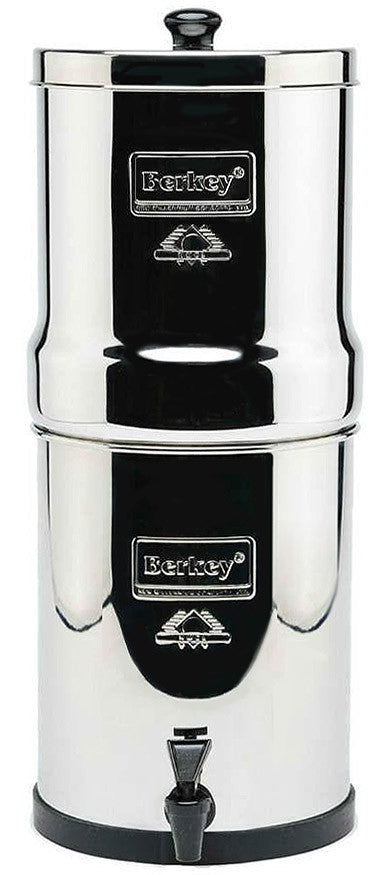
Travel Berkey Water Filter
The Travel Berkey is a compact stainless steel system for individuals, couples, RVs, and smaller kitchens.
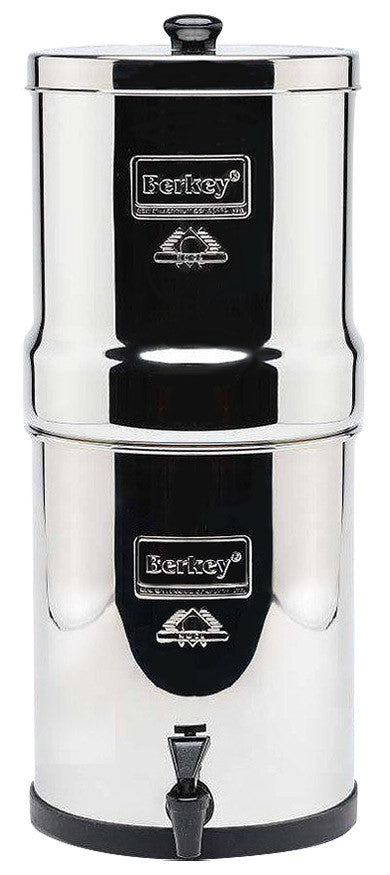
Big Berkey Water Filter
The Big Berkey is one of the most popular Berkey systems for everyday home drinking water.
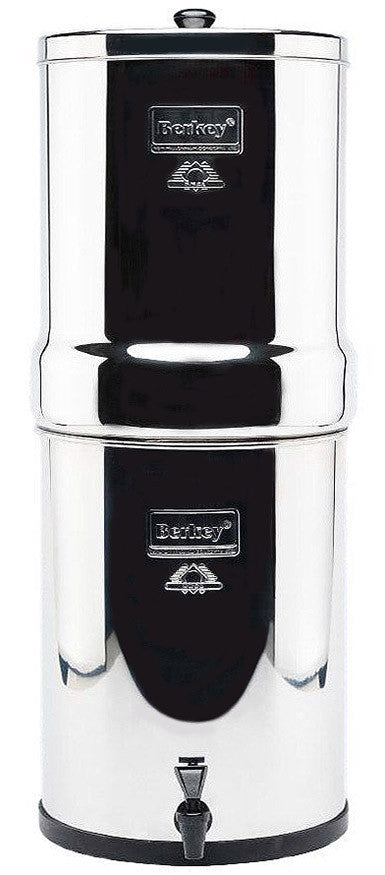
Royal Berkey Water Filter
The Royal Berkey offers more capacity for families or households that use more drinking water each day.

Final Thoughts
Sterile, distilled, and deionized water are not interchangeable.
Sterile water is used for controlling microorganisms. Distilled water is produced by separating water from many dissolved substances through steam distillation and condensation. Deionized water is about removing charged mineral ions through resin exchange.
For everyday drinking, most families do not need medical sterile water, distilled water, or deionized water. A well-maintained drinking water filter is often the more practical option for taste, convenience, and daily use.
← Older Post Newer Post →